If you’ve been diagnosed with cataracts or are experiencing cloudy, blurry vision, you may be wondering whether it’s time for cataract surgery. Cataracts are one of the most common age-related eye conditions, affecting millions of Americans each year. The good news is that cataract surgery is one of the safest and most successful procedures performed today.
At Overlake EyeCare, we provide comprehensive cataract evaluation and surgical care at our Kirkland and Bellevue locations. This guide explains what cataracts are, when surgery becomes necessary, and what you can expect throughout the process.
Key Takeaways
- Cataract surgery is one of the safest and most commonly performed procedures, with a success rate over 95%.
- The outpatient procedure typically takes 15-30 minutes, with most patients returning home the same day.
- Modern lens implant options can correct distance, near, and astigmatism, potentially reducing dependence on glasses.
- Recovery is typically quick, with many patients noticing improved vision within days.
- Overlake EyeCare offers comprehensive cataract care at our Kirkland location, from diagnosis through post-operative follow-up.
1. Understanding Cataracts
A cataract is a clouding of the eye’s natural lens, which sits behind the iris and pupil. This lens focuses light onto the retina, allowing you to see clearly. When the lens becomes cloudy, light cannot pass through as easily, resulting in vision problems.
Common cataract symptoms include:
- Blurry or hazy vision
- Increased sensitivity to glare, especially when driving at night
- Colors appearing faded or yellowed
- Frequent changes in glasses prescription
- Difficulty reading or seeing in low light
- Double vision in one eye
Cataracts develop gradually, often as part of the natural aging process. Most people begin developing cataracts after age 60, though they can occur earlier due to factors like diabetes, eye injury, prolonged steroid use, or excessive sun exposure.
2. When Is Cataract Surgery Needed?
Not everyone with cataracts needs surgery immediately. In the early stages, updated glasses, better lighting, and magnification can help manage symptoms. Surgery is typically recommended when cataracts begin interfering with daily activities such as:
- Driving safely, especially at night
- Reading or working on the computer
- Watching television
- Recognizing faces
- Hobbies and recreational activities
- Working or performing job duties
Your eye doctor will help you determine the right timing based on how your cataracts are affecting your quality of life. There’s no medical urgency in most cases, so you can take time to make an informed decision.
3. The Cataract Surgery Procedure
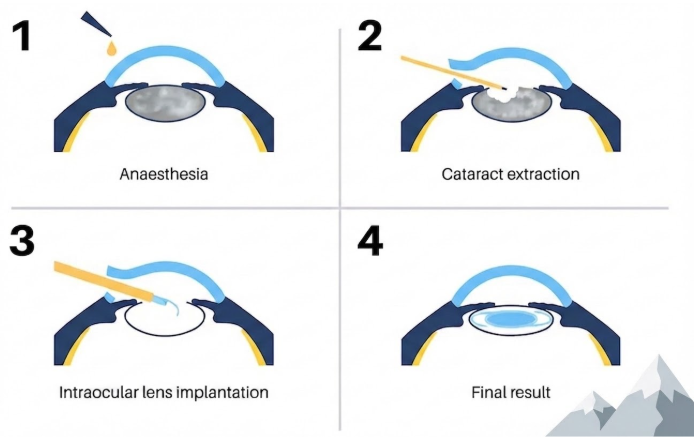
Modern cataract surgery is a safe, outpatient procedure that typically takes 15 to 30 minutes per eye. Here’s what happens:
- Your eye is numbed with drops, so you won’t feel pain during the procedure
- A tiny incision is made in the cornea (typically 2-3 millimeters)
- Ultrasound energy breaks up the cloudy lens into small pieces
- The lens fragments are gently suctioned out
- A clear artificial lens (intraocular lens or IOL) is inserted
- The incision typically seals on its own without stitches
You’ll be awake during the procedure but sedated and comfortable. Most patients report feeling only mild pressure. After a short recovery period, you’ll be ready to go home with a friend or family member.
4. Intraocular Lens Options
One of the most important decisions in cataract surgery is choosing the right replacement lens. Today’s IOL options offer more choices than ever:
Comparing Lens Options
| Lens Type | Description | Best For |
|---|---|---|
| Monofocal | Standard lens with one focus point, typically set for distance | Patients comfortable wearing reading glasses |
| Multifocal | Multiple focus zones for distance, intermediate, and near | Patients wanting reduced dependence on glasses |
| Toric | Corrects astigmatism in addition to cataract removal | Patients with significant astigmatism |
| Extended Depth of Focus | Continuous range of vision from distance to intermediate | Patients wanting good computer and distance vision |
| Light Adjustable Lens | Lens implant that can be adjusted in postoperative treatments using a Light Delivery Device, typically yielding blended vision with both eyes including distance, intermediate, and near | Patients who have had previous LASIK or PRK or who want to be able to more precisely control their visual outcome with postoperative adjustments, also good for moderate astigmatism |
Your surgeon will discuss which lens best matches your lifestyle, visual needs, and budget. Premium lenses may have additional out-of-pocket costs but can provide significant lifestyle benefits.
5. Recovery and Results
First 24 hours: Rest at home. Some blurriness, mild discomfort, and light sensitivity are normal.
First week: Vision improves daily. Use prescribed eye drops to prevent infection and inflammation. Avoid rubbing your eye, swimming, and heavy lifting.
First month: Most restrictions are lifted. Vision typically stabilizes, and you can get new glasses if needed.
Long-term: The artificial lens is permanent and does not need replacement. Results typically last a lifetime.
If you have cataracts in both eyes, surgery is usually performed on one eye at a time, with a few weeks between procedures to allow the first eye to heal.
6. Cataract Surgery at Overlake EyeCare Kirkland
Our Kirkland office provides comprehensive cataract care for patients throughout the Eastside. What sets us apart:
- Experienced surgeons: Dr. Mary Coday is a Harvard-trained, board-certified ophthalmologist with extensive cataract surgery experience.
- Complete care under one roof: From initial diagnosis through post-operative follow-up, all your care happens at our Kirkland location.
- Advanced diagnostic technology: Precise measurements ensure the best lens selection and surgical outcomes.
- Full range of lens options: We offer standard and premium IOLs to match your visual goals.
- Personalized approach: We take time to understand your lifestyle and vision needs to recommend the best treatment plan.
- Convenient location: Easy access for patients in Kirkland, Redmond, Bothell, Woodinville, and surrounding communities.
Frequently Asked Questions
Is cataract surgery painful?
No. The eye is completely numbed with drops before surgery, and most patients feel only mild pressure during the procedure. Afterward, some mild discomfort or scratchiness is common but typically resolves within a day or two.
How long does cataract surgery take?
The surgery itself takes 15-30 minutes per eye. Plan to be at the surgical center for about 2-3 hours total, including preparation and recovery time.
Will I need glasses after cataract surgery?
It depends on the lens you choose. Standard monofocal lenses typically require reading glasses. Premium multifocal or extended depth of focus lenses can significantly reduce or eliminate the need for glasses, though some patients may still need them for certain activities.
Can cataracts come back after surgery?
Cataracts cannot return once the natural lens is removed. However, some patients develop posterior capsule opacification (PCO) months or years later, which can cause similar symptoms. This is easily treated with a quick, painless laser procedure.
Is cataract surgery covered by insurance?
Medicare and most insurance plans cover standard cataract surgery and monofocal lens implants. Premium lens upgrades may have additional out-of-pocket costs. Our staff can help you understand your coverage and costs before scheduling surgery.
How do I know if I’m a candidate for cataract surgery?
A comprehensive eye exam can determine if you have cataracts and whether surgery would benefit you. Good candidates are those whose cataracts are affecting their quality of life and who are in generally good health.
Conclusion: See Clearly Again
If cataracts are affecting your vision and quality of life, it may be time to explore your surgical options. Cataract surgery has helped millions of people see clearly again, and with today’s advanced techniques and lens options, outcomes are better than ever.
At Overlake EyeCare, we’ve been serving the Kirkland and Bellevue communities for over 40 years. Contact us today to schedule a cataract consultation and take the first step toward clearer vision.