Most adults don’t think much about their eyes until something feels off. A little dryness, a bit of blur, eyes that feel tired at the end of a workday. These small annoyances usually get brushed aside until they start interfering with daily life. The reality is that some of the most common eye problems Bellevue adults walk into our office with are easy to fix, while others are early signs of something worth catching now.
At Overlake EyeCare in Bellevue, we see a wide mix of patients dealing with everyday eye issues, from digital eye strain caused by long days at a computer to age-related changes like cataracts and presbyopia. This guide covers the eye problems we see most often, what tends to cause them, and the point at which it’s worth getting checked out.
Key Takeaways
- Many common eye complaints, like dryness, blur, and eye strain, are easily treatable when patients seek help early.
- Bellevue’s tech-heavy workforce means digital eye strain and screen-related dry eye are some of the most common issues we see.
- Some symptoms feel minor but can be early signs of more serious conditions like glaucoma, macular degeneration, or diabetic eye disease.
- Adults over 40 should expect normal vision changes, but should also be screened more regularly for age-related conditions.
- Most eye problems are easier to treat the earlier they’re detected.
- Overlake EyeCare in Bellevue evaluates and treats the full range of common adult eye issues.
1. Digital Eye Strain and Computer Vision Issues
Bellevue is a tech town. Between Microsoft, Amazon, and the dozens of other companies that fill the city’s office towers, plenty of patients spend 8-10+ hours a day staring at screens. That kind of sustained focus takes a real toll on the eyes.
Common symptoms of digital eye strain include:
- Tired, sore, or burning eyes at the end of the workday
- Blurry vision after long periods of screen time
- Headaches that start in the forehead or behind the eyes
- Difficulty refocusing between near and far distances
- Dry, irritated eyes from reduced blinking while reading screens
Most digital eye strain is manageable with small changes: the 20-20-20 rule (every 20 minutes, look 20 feet away for 20 seconds), proper monitor positioning, and an updated prescription that accounts for screen distance. Some patients benefit from computer-specific glasses or blue light filtering. When dryness is part of the picture, prescription drops or in-office treatment can make a noticeable difference.
2. Dry, Irritated, or Watery Eyes
Dry eye is one of the most common reasons adults visit our Bellevue office. The name is a little misleading because the eyes can actually feel watery, gritty, or like there’s something stuck in them. What ties these symptoms together is poor tear quality, not just tear quantity.
Patients with dry eye often describe:
- A gritty or sandy feeling in the eyes
- Vision that fluctuates throughout the day, especially with reading
- Burning, stinging, or redness that flares up in certain environments
- Watery eyes that seem to overcompensate for dryness
- Eyes that feel worse in air conditioning, wind, or low humidity
Treatment ranges from artificial tears and warm compresses for mild cases to prescription drops, punctal plugs, and in-office procedures for more advanced dry eye. There’s no single solution that works for everyone, which is why a proper evaluation matters.
3. Trouble Reading or Seeing Up Close (Presbyopia)
Somewhere in the early to mid-40s, most adults start noticing that small print is harder to read. Restaurant menus look fuzzy. The phone has to be held a little farther away. This is presbyopia, the gradual loss of the eye’s ability to focus on near objects, and it happens to almost everyone with age.
Presbyopia isn’t a disease. It’s a normal part of aging. But it does need attention because trying to power through without help leads to eye strain, headaches, and frustration. Options include:
- Reading glasses for occasional close work
- Progressive or bifocal lenses for full-time wear
- Multifocal or monovision contact lenses
- Refractive surgery options for select candidates
- Premium intraocular lenses if cataract surgery is also on the horizon
4. Cataracts and Age-Related Vision Changes
Cataracts are extremely common after age 60, and many patients are surprised at how gradually they develop. The vision change isn’t sudden. It’s a slow drift toward hazier, dimmer, glare-prone vision that many people accept it as part of getting older until they realize how much it’s affecting daily
life. Signs that age-related vision changes may be cataracts include:
- Glare from headlights that makes night driving uncomfortable
- Colors that look dimmer or more yellow than they used to
- Frequent prescription updates that no longer fix the blur
- Difficulty reading even with the right glasses
- Bright sunlight that suddenly feels overwhelming outdoors
Cataract surgery is one of the most successful procedures in medicine and can often be timed around the patient’s lifestyle. There’s no rush to wait until the cataract is severe, and modern lens options can also reduce the need for glasses afterward.
5. Eye Pressure, Floaters, and Other Silent Concerns
Some of the most serious eye problems don’t come with obvious symptoms. Glaucoma, for instance, often has no early warning signs. Macular degeneration can start subtly. Diabetic eye disease can quietly progress for years before patients notice vision changes. These are the conditions where comprehensive eye exams pay off the most, because they’re caught through screening, not through symptoms.
That said, some signs are worth paying attention to:
- A sudden increase in floaters or flashes of light
- Loss of side vision or tunnel vision
- Straight lines that look wavy or distorted
- A dark or empty spot in the center of your vision
- Eye pain or pressure, especially with nausea
Sudden floaters, flashes, or any significant change in vision warrant urgent evaluation. The rest are all reasons to make a comprehensive eye exam a priority sooner rather than later.
6. Common Eye Problems and When to Act
Here’s a quick reference for the most common adult eye concerns and how urgently they generally need to be addressed.
When to Schedule an Appointment
| Symptom or Problem | Likely Cause | When to Get Checked |
| Tired, sore eyes after screen time | Digital eye strain | Within a few weeks if persistent |
| Gritty, burning, or watery eyes | Dry eye disease | Within a few weeks |
| Trouble reading small print | Presbyopia | At your next routine exam |
| Frequent glasses prescription changes | Refractive shift or early cataract | Within a few months |
| Glare and halos at night | Cataracts or dry eye | Within a few weeks |
| Sudden floaters or flashes | Retinal issue, possibly urgent | Same day or next day |
| Sudden vision loss | Potentially serious | Immediate, same day |
| No symptoms, age 40+ | Routine screening | Annual comprehensive exam |
Use this as a general guide. When in doubt, it’s always better to call and ask. Most eye problems are easier to treat the earlier they’re addressed.
7. Why Bellevue Adults Should Make Eye Exams a Priority
A few things specific to adults living and working in Bellevue:
High screen time is the norm. Long workdays in front of monitors are taking a measurable toll on tear film stability and binocular vision in adults across the Eastside.
Age 40 is a turning point. After 40, the risk of presbyopia, dry eye, glaucoma, cataracts, and macular degeneration all rise. Annual comprehensive eye exams become much more important.
Many systemic conditions show up in the eyes first. Diabetes, high blood pressure, and autoimmune conditions can all reveal themselves during a routine eye exam, sometimes before a primary care doctor would catch them.
Family history matters. If a parent or sibling has glaucoma, macular degeneration, or diabetic eye disease, your risk is higher. Earlier and more frequent screening can make a major difference.
8. Eye Care for Adults at Overlake EyeCare Bellevue
Our Bellevue office provides a full range of eye care for adults dealing with everything from common screen-related issues to age-related conditions and complex eye disease. What sets us apart:
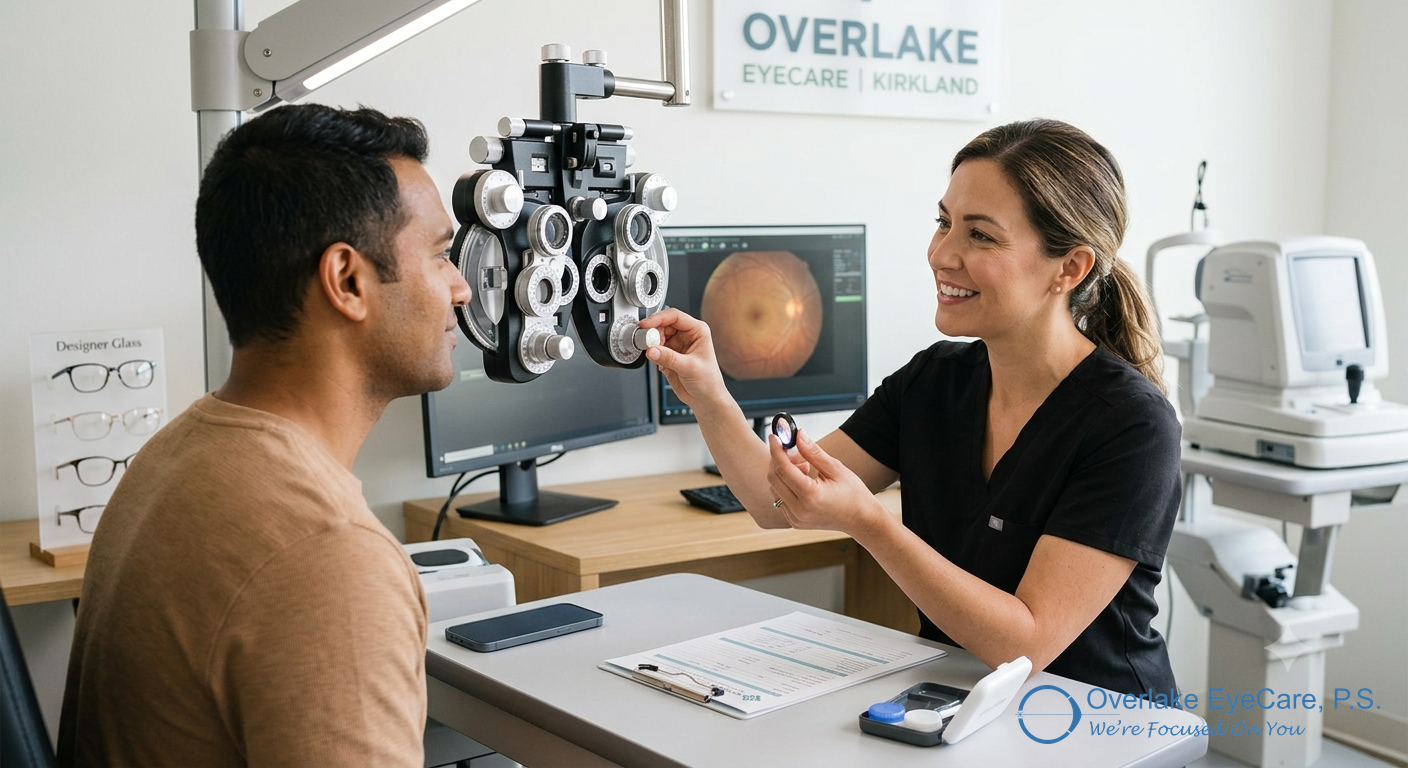
MDs and ODs on site: Our board-certified ophthalmologists and optometrists work together, so patients with any condition can get the right level of care without bouncing between practices.
Complete adult eye care: From dry eye and digital eye strain through presbyopia, cataracts, glaucoma, and macular degeneration, our team handles diagnosis, treatment, and ongoing management under one roof.
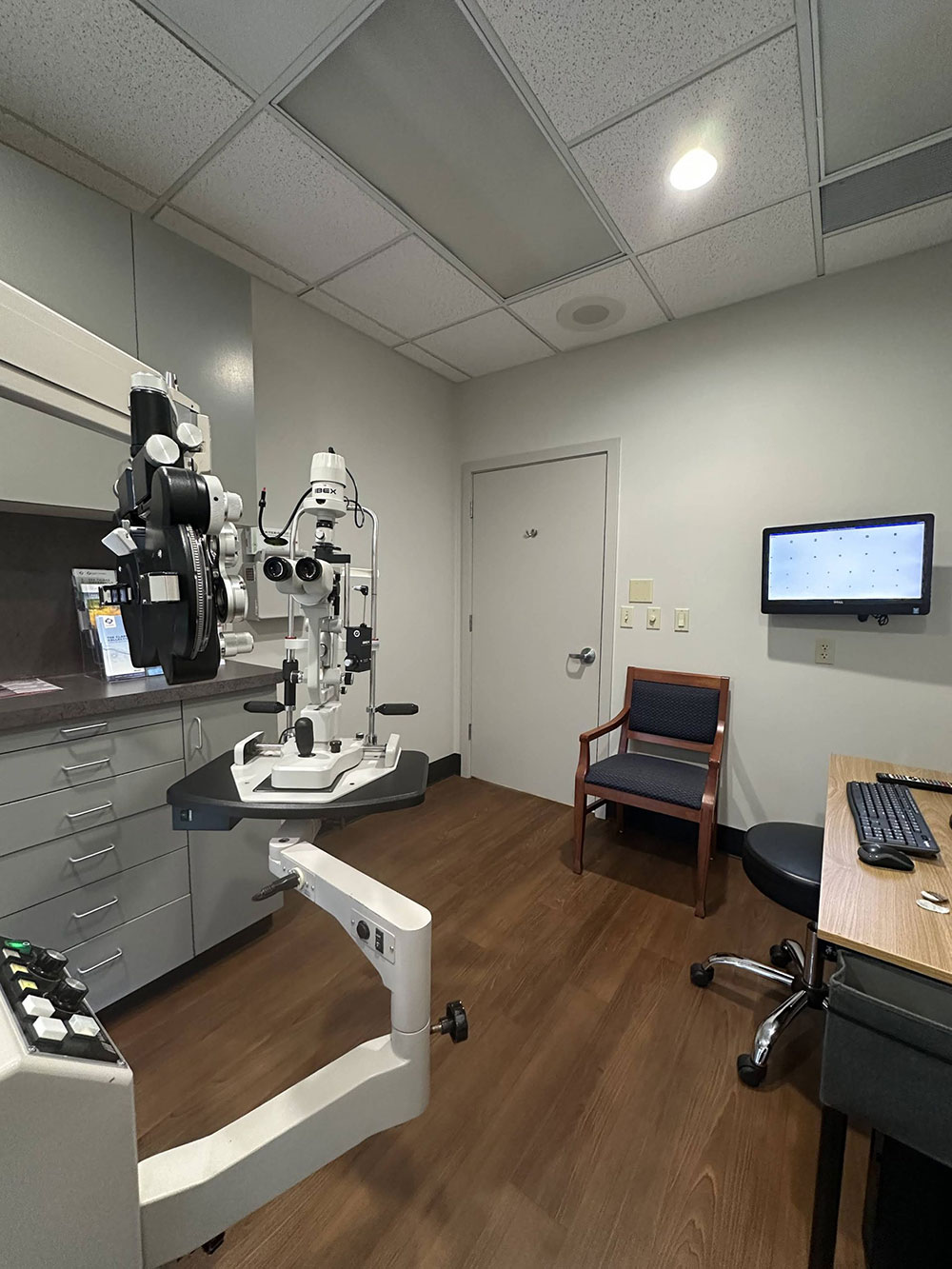
Advanced diagnostic technology: Our Bellevue office uses modern imaging and testing equipment to catch issues earlier and monitor changes over time with precision.
Same-day care when needed: For sudden vision changes, eye pain, or injury, our office accommodates urgent visits when possible.
Convenient access: Easy to reach for patients throughout Bellevue, Redmond, Kirkland, Bothell, Woodinville, and surrounding communities.
A second location in Kirkland: If our Kirkland office works better for your schedule, the same comprehensive services are available there as well.
Frequently Asked Questions
How often should adults get an eye exam in Bellevue?
Most adults under 40 should have a comprehensive eye exam every 1 to 2 years. After 40, annual exams are generally recommended. Patients with diabetes, glaucoma, family history of eye disease, or other risk factors may need more frequent visits.
Is digital eye strain causing permanent damage?
Digital eye strain generally doesn’t cause permanent damage, but it can make existing conditions like dry eye and refractive errors worse. The discomfort itself is a signal worth addressing, both for daily comfort and for catching any underlying issues.
My eyes feel fine. Do I still need an eye exam?
Yes. Many of the most serious eye conditions, including glaucoma and early macular degeneration, have no symptoms in their early stages. Comprehensive eye exams are the only reliable way to catch them when they’re most treatable.
What’s the difference between a vision check and a comprehensive eye exam?
A vision check only tests how clearly you see. A comprehensive eye exam evaluates the full health of your eyes, including the retina, optic nerve, and eye pressure. It’s a much more thorough evaluation and the one that catches serious conditions.
Are eye exams covered by insurance?
Most vision insurance plans cover annual comprehensive eye exams. Medical insurance often covers care related to specific conditions like diabetes, glaucoma, or eye disease. Our staff can help you understand your specific coverage before your visit.
Can my whole family come to Overlake EyeCare?
Yes. Our practice cares for adults and children, so families can use one practice across all generations. Having a single eye care home makes ongoing care simpler over time.
Do I need a referral to see an eye doctor in Bellevue?
Most vision care does not require a referral. As a medical practice, Overlake Eyecare accepts your medical insurance. We do not take vision insurance. If your insurance card explicitly says HMO, please call your PCP to get an insurance referral for an approved number of appointments to meet Dr. Coday.
What’s the easiest way to schedule an appointment?
You can call our Bellevue office directly or use the contact form on our website. Most appointments can be scheduled within a few weeks, with same-day availability for urgent concerns when possible.
Conclusion: Don’t Brush Off the Small Stuff
Most eye problems start small. A little dryness, occasional blur, eyes that feel tired more often than they used to. The patients who do best are the ones who pay attention to those early signals and get checked out before things progress. Whether it’s a simple prescription update, a treatment for dry eye, or screening for a more serious condition, the value of a thorough eye exam goes well beyond the comfort of clear vision.
At Overlake EyeCare, we’ve been serving Bellevue and the surrounding communities for over 40 years. Contact us today to schedule an eye exam at our Bellevue office, and take care of the small stuff before it becomes the big stuff.