 Your eyes work harder than almost any other part of your body. From the moment you wake up to the moment you fall asleep, they’re constantly adjusting, focusing, and processing the world around you. But many adults don’t think about their eye health until something feels wrong. Comprehensive eye care is about more than just clear vision. It’s about preserving long-term eye health, catching disease early, and supporting the way you live, work, and see.
At Overlake EyeCare, we provide a complete range of eye care services at our Bellevue office, from routine comprehensive eye exams to advanced treatment for complex eye conditions. This guide explains what comprehensive eye care includes, when to schedule a visit, and what to expect when you choose Overlake EyeCare for your vision and eye health needs.
Key Takeaways
- Comprehensive eye care covers everything from routine exams to advanced treatment for eye disease.
- Adults should have a comprehensive eye exam every 1 to 2 years, with more frequent visits after age 40 or for those with certain health conditions.
- Many serious eye conditions, including glaucoma and macular degeneration, have no early symptoms and can only be caught through a thorough exam.
- Comprehensive eye exams can also reveal early signs of broader health conditions like diabetes and high blood pressure.
- A comprehensive eye care practice handles vision correction, eye disease management, and specialty treatment under one roof.
- Overlake EyeCare offers comprehensive eye care at our Bellevue office, with services ranging from routine exams to advanced specialty care.
1. Understanding Comprehensive Eye Care
Comprehensive eye care goes well beyond a basic vision check. While a simple vision screening might tell you whether you can read the eye chart, a comprehensive eye exam evaluates the full health of your eyes, the way they work together, and any early signs of disease that could affect your vision in the future.
A comprehensive eye care visit typically includes:
- Visual acuity testing at far and near distances
- Refraction to determine if you need glasses or a prescription update
- Eye coordination, focusing, and depth perception assessment
- Eye pressure measurement (a key screening for glaucoma)
- Detailed examination of the front and back of the eye, including the retina and optic nerve
- Discussion of any vision concerns and personalized recommendations
Comprehensive eye care matters because the eyes are one of the few places in the body where doctors can directly observe blood vessels, nerves, and tissue without imaging or surgery. That makes a thorough eye exam a powerful tool not just for vision, but for overall health.
2. When to Schedule an Appointment
How often you should see an eye care provider depends on your age, your eye health history, and any risk factors you may have. The American Optometric Association recommends the following general schedule for adults:
- Ages 18 to 39: Comprehensive eye exam every 2 years, or annually if you wear glasses or contacts.
- Ages 40 to 64: Comprehensive eye exam every 1 to 2 years, since the risk of conditions like glaucoma and presbyopia rises during this period.
- Ages 65 and older: Annual comprehensive eye exams to monitor for age-related conditions like cataracts and macular degeneration.
You should also schedule an eye care visit, regardless of your last exam, if you experience any of the following:
- Sudden vision changes or vision loss
- Eye pain, redness, or persistent irritation
- Flashes of light, new floaters, or a curtain across your vision
- Eye injury or foreign object in the eye
- Headaches, eye strain, or difficulty seeing during everyday tasks
- A new diagnosis of diabetes or high blood pressure
- A family history of glaucoma, macular degeneration, or other eye disease
3. Services Included
A true comprehensive eye care practice offers a full range of services so patients don’t have to bounce between specialists for routine and complex needs. At Overlake EyeCare, our Bellevue office handles eye care across the entire spectrum, including:
- Routine comprehensive eye exams for adults and children
- Vision correction through glasses and contact lenses, including specialty contact lens fittings
- Dry eye evaluation and treatment, including advanced therapies for chronic dry eye
- Diabetic eye care and screening for diabetic retinopathy
- Glaucoma testing, monitoring, and management
- Cataract evaluation and surgical co-management
- Macular degeneration screening and ongoing monitoring
- Myopia management for children and teens
- Emergency eye care for sudden vision changes, injuries, or eye pain
4. Common Eye Care Services and What They Cover
If you’ve never been to a comprehensive eye care practice, knowing the names of common services can help you understand what to expect and what may be appropriate for you.
Eye Care Services at a Glance
| Service | What It Includes | Best For |
| Comprehensive Eye Exam | Full evaluation of vision, eye health, and overall eye function | Adults and children needing routine eye care or a vision update |
| Contact Lens Fitting | Personalized fitting, lens trials, and follow-up to ensure comfort and clarity | New contact lens wearers or anyone wanting to update their lenses |
| Dry Eye Treatment | Diagnosis and treatment of chronic dryness, irritation, and tear film issues | Patients with persistent burning, redness, or fluctuating vision |
| Diabetic Eye Care | Specialized exams to detect and monitor diabetic eye disease | Anyone with diabetes, even without current vision changes |
| Glaucoma Management | Eye pressure testing, imaging, and ongoing care to protect the optic nerve | Patients with elevated eye pressure or family history of glaucoma |
| Emergency Eye Care | Same-day or urgent care for sudden eye problems and injuries | Anyone experiencing sudden vision changes, eye pain, or injury |
If you’re not sure which service is right for you, a comprehensive eye exam is almost always the right starting point. From there, your eye doctor can recommend any additional services or specialty care based on what they find.
5. What to Expect at Your Eye Care Visit
If you’ve never been to Overlake EyeCare, here’s what a typical comprehensive eye care visit looks like:
Health and vision history: Your visit starts with a conversation about your vision, eye health, general health, medications, and any concerns. Family history is important too, since some eye conditions run in families.
Vision testing: The doctor checks how clearly you see at far and near distances, with and without correction.
Refraction: Using a series of lenses, the doctor determines whether your prescription has changed and what correction would give you the clearest vision.
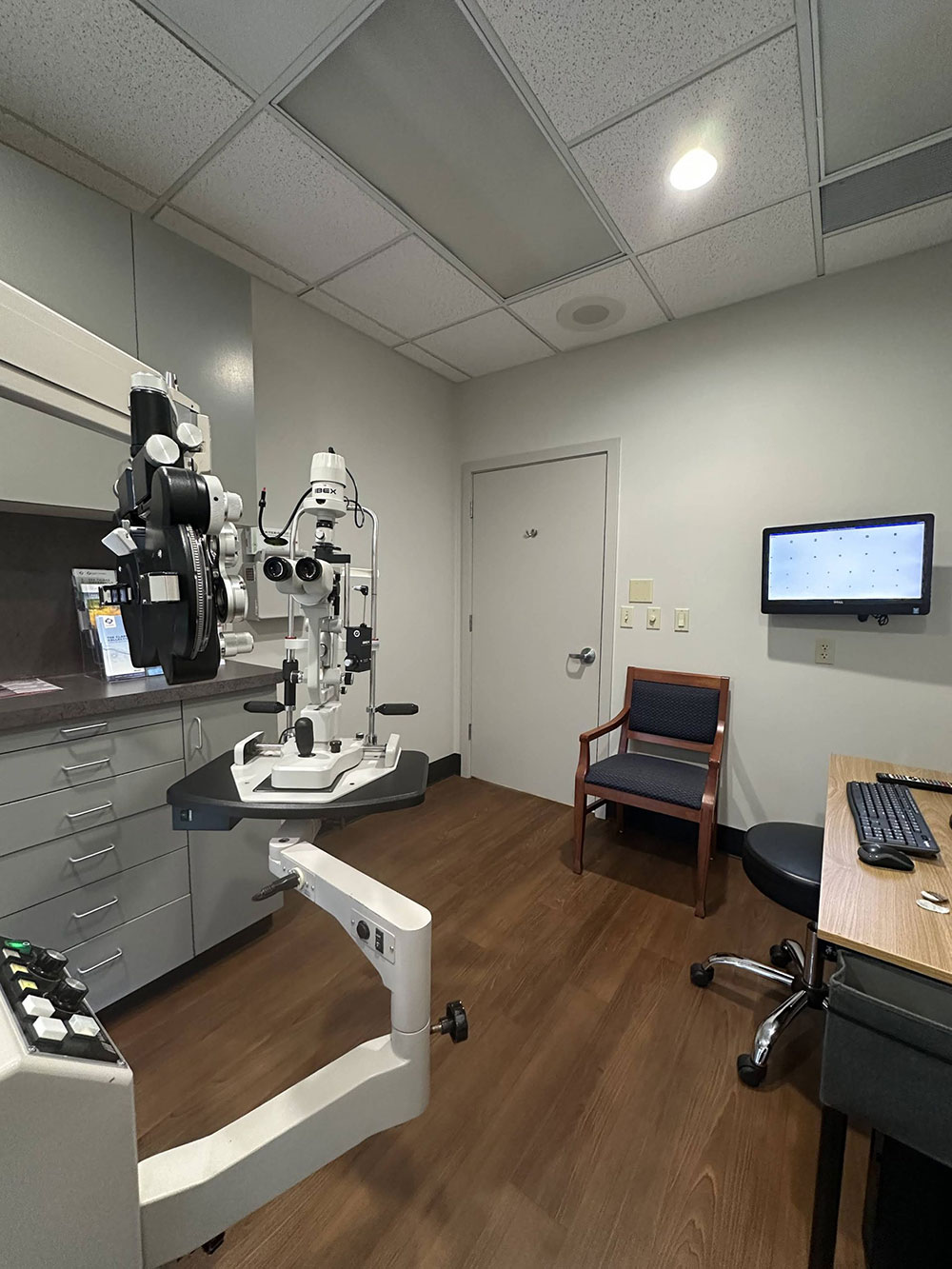
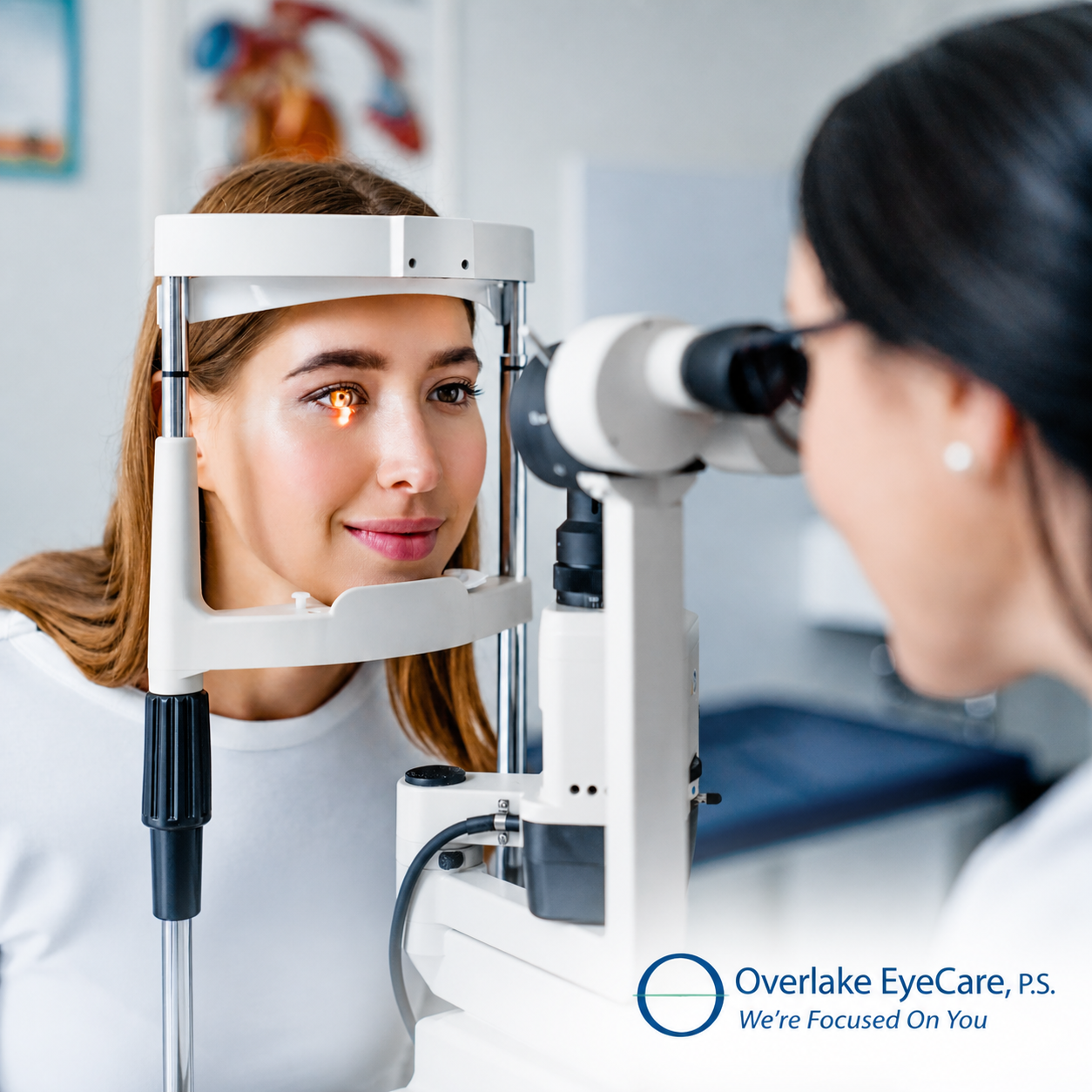
Eye health evaluation: The doctor uses specialized instruments to examine the front and back of the eye, including the retina, optic nerve, and blood vessels. Eye pressure is measured to screen for glaucoma.
Discussion and recommendations: The doctor walks you through the findings, answers your questions, and recommends any next steps, whether that’s an updated prescription, additional testing, or treatment.
A typical comprehensive eye exam takes 30 to 60 minutes. Plan for a little extra time if it’s your first visit or if dilation is needed, since dilated pupils can affect your vision for a few hours afterward.
6. Why Choose Overlake EyeCare, PS
Our Bellevue office provides comprehensive eye care for adults and children across the Eastside. What sets us apart:
Experienced doctors: Our board-certified optometrists and ophthalmologists provide thorough exams, accurate diagnoses, and trusted treatment recommendations.
Complete care under one roof: From routine exams and contact lens fittings to glaucoma management and diabetic eye care, we handle the full spectrum of eye care needs at one location.
Advanced diagnostic technology: Our office uses modern imaging and testing equipment to catch issues earlier and monitor changes over time with precision.
Personalized approach: We take the time to understand your lifestyle, vision goals, and health history so we can recommend care that fits your specific needs.
A second location in Kirkland: If our Kirkland office is more convenient for you, the same comprehensive eye care services are available there as well.
Convenient access: Our Bellevue office is easy to reach for patients throughout Bellevue, Redmond, Kirkland, Bothell, Woodinville, and surrounding communities.
FAQs: Frequently Asked Questions
How often should I have a comprehensive eye exam?
Most adults under 40 should have a comprehensive eye exam every 2 years, or annually if they wear glasses or contacts. After age 40, annual exams are generally recommended. Patients with diabetes, glaucoma, or other risk factors may need more frequent visits.
What’s the difference between a vision screening and a comprehensive eye exam?
A vision screening (the kind done at school or the DMV) only tests basic visual acuity. A comprehensive eye exam evaluates the full health of your eyes, screens for disease, and assesses how well your eyes work together. It’s a much more thorough evaluation.
Do I still need an eye exam if I have 20/20 vision?
Yes. Many serious eye conditions, including glaucoma and early macular degeneration, can develop without affecting visual acuity. A comprehensive eye exam is the only way to detect these conditions early, when they’re most treatable.
Does insurance cover comprehensive eye care?
Most vision insurance plans cover annual comprehensive eye exams. Medical insurance often covers eye care related to specific health conditions, such as diabetes or glaucoma. Our staff can help you understand your specific coverage before your visit.
What should I bring to my eye care appointment?
Please bring your current glasses or contact lenses, a list of any medications you take, your insurance information, and any relevant medical records. If you’ve had previous eye care
elsewhere, bringing recent records can be helpful as well.
Can a comprehensive eye exam detect health problems beyond the eyes?
Yes. Eye exams can reveal early signs of diabetes, high blood pressure, high cholesterol, autoimmune conditions, and even certain types of cancer. The eye is the only place where doctors can directly observe blood vessels and nerves without imaging or surgery.
How long does a comprehensive eye exam take?
A typical comprehensive eye exam takes between 30-60 minutes. First-time visits and exams that include dilation may take a little longer. Plan for any follow-up testing or time needed for your eyes to recover from dilation.
Conclusion: Take Care of the Vision That Takes Care of You
Your vision affects nearly every part of your daily life. Regular comprehensive eye care helps you protect that vision, catch health issues early, and stay ahead of changes that could otherwise sneak up on you. Whether you’re due for a routine exam, dealing with a new vision concern, or managing an ongoing eye condition, a thorough eye care visit is one of the most valuable health appointments you can keep.
At Overlake EyeCare, we’ve been serving the Bellevue and Kirkland communities for over 40 years. Take the next step toward clearer vision and better long-term eye health. Contact us today to schedule a comprehensive eye care visit at our Bellevue office: 425-643-2020.